Your 6-step guide to choosing the right EHS solution
Whether you’re looking to invest in EHS-specific software for the very first time, or you want to upgrade your existing system, we’ve outlined the practical steps you can take to simplify the evaluation process.
Step 1: Assess your organization’s EHS needs
Before you start rating EHS software or comparing features, it’s a good idea to think about what you need from an EHS platform. To do this, you should consider your risk profile including:
- The size of your workforce
- The scope of regulations you must adhere to
- Whether you manage high risk activities or hazardous chemicals
- Whether you manage remote or lone workers
Create a clear list of your EHS platform selection criteria and identify your current challenges. Talk to your team and ask the following questions to establish requirements.
1. What are our primary pain points? Are we currently struggling with incident tracking, reporting delays, KPI assessments, or audit readiness?
2. Who will be using the system? What different user groups do we have, and what level of access does each group need? Do we need a field-based system with a mobile solution?
3. What are our main priorities? Do we need to focus on compliance, safety culture, or reporting? Do we need the solution to include sustainability reporting?
4. Is the platform scalable? Can it grow with our organization and cater for multiple sites or function across different regions?
5. Is the software quick and easy to implement? How easily can it be rolled out? Can we start with a single module? What training is provided?
Tip: Assign a weighted value to each factor so you can compare solutions fairly during evaluation.
Step 2: Decide who should be involved in decision making
Choosing the right EHS software requires a cross-functional team. This ensures that the system is effective, secure, and easy to use. Below are the key stakeholder groups.
1. EHS managers – are the primary owners of the system. They have vital insight on how the system will be used, whether it meets legislative demands, and what data is required for audits and inspections.
2. IT managers – can assess compatibility with existing tech, flag potential security vulnerabilities, and ensure the software has reliable cloud infrastructure.
3. Operations managers – oversee day-to-day performance across facilities. They will evaluate how the platform supports standardized workflows, boosts productivity, and enables safer working routines.
4. Front-line employees –are not the primary users of the system but will engage with it regularly through reporting activities and safety training. If the solution is difficult to use, user adoption will suffer, reducing the likelihood that safety improvements are embedded in day-to-day operations.
5. Finance managers – control the budget and handle vendor contracts. They will be focused on cost efficiency, Return on Investment (ROI) and long-term vendor stability.
Tip: Identify your “EHS Champions” who will drive the program forward, including those that control the budget and have the final sign off.
Step 3: Evaluate the features that matter most
Once you have a clear idea of what you need, explore the solutions available and the capabilities on offer. Core capabilities could include:
Robust incident reporting and investigation – Prioritize solutions with seamless workflows for stakeholder notifications, action assignment, and progress tracking. Integrated root cause analysis (RCA) enables organizations to understand why incidents occur, not just document them.
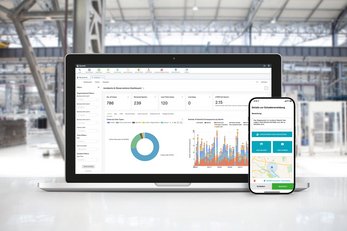
Intelligent risk management – Choose software that supports structured risk assessments with dynamic risk matrices across different risk areas and use cases. Advanced analytics tools and interactive dashboards help identify hotspots and drive timely corrective and preventive actions (CAPA).
Regulatory compliance and audits – Automated reminders for inspections, permit renewals, and training ensure that employees don’t miss important deadlines. Look for standardized audit checklists and platforms that provide built-in legal registers with integrated regulatory tracking services to keep your operations aligned with legal requirements and standards such as ISO 14001 and ISO 45001.
Front-line friendly mobile access – Boost adoption with a mobile interface that requires little to no training. Users should be able to submit near-misses and hazards in just a few minutes. Photos and videos captured on smartphones can be automatically analyzed and transformed into written reports with the help of AI-powered tools.
Advanced reporting and analytics – Dashboards and analytics turn safety data into valuable insights. Look for systems that provide high level KPIs and allow safety managers to drill down into specific site data.
Tip: The best EHS management software doesn’t just record risk, it actually helps you control it. Look for advanced safety analysis and reporting tools to identify trends and demonstrate proactive risk management.
Step 4: Get to know the vendor companies
Your choice of software vendor is critical. It will impact your workplace safety and compliance for years to come, in addition to software roll-out and induction training.
When assessing EHS software providers, consider the following:
- Do they have proven experience delivering projects at your scale?
- What support do they offer during rollout, implementation, and user onboarding?
- What ongoing training and customer support are included
- How responsive is their email or phone support?
- What does their product roadmap look like?
Tip: Ongoing collaboration is important, so do your research. Ask for customer references, talk to other users, reach out to fellow professionals and look out for potential red flags.
Step 5: Dig deep during the demo
Once you have identified a shortlist of three or four vendors, schedule a demo tour or a free trial to see how the software performs in practice.
Don’t just follow the standard walkthrough. Prepare a clear list of questions based on your organization’s unique needs, plus specific queries you have regarding that vendor’s solution, so you can see how competing products match up.
- Use a scorecard: Map out real-life safety scenarios and compliance reporting needs. Provide your questions to all vendors beforehand to ensure direct, ”apples-to-apples” comparisons.
- Prioritize corrective action: Have the vendor show you how data flows into action tracking, how automated reminders are assigned, and how verification is documented.
- Involve key stakeholders: Bring end-users to the demo. Safety managers can focus on dashboards, while IT verify platform security and integration with your existing systems.
Tip: If the demo goes well, consider arranging a follow-up session to discuss additional use cases and bring more of your stakeholders into the conversation.
Step 6: Establish ROI and prepare a business case for investment
Calculating the Return on Investment (ROI) is a crucial step for securing leadership buy-in. It proves that EHS software is not just an expense, but a strategic investment that drives the bottom line.
To build an actionable business case, you can evaluate your return using a structured formula, compare vendors via third-party scorecards, and align your financial pitch to specific stakeholder concerns.
- For the CFO: Focus strictly on the bottom line. Compare platforms based on their total cost of ownership (TCO), quantifiable time savings, and estimated payback period.
- For the CEO: Focus on risk management. Compare how different vendors handle corrective actions, compliance tracking, and brand protection to minimize liability.
- For operations teams: Focus on efficiency. Compare the user-friendliness of mobile apps, QR code near-miss reporting, and intuitive dashboard analytics.
For more advice on what matters to your CFO and the outcomes they care most about, check out our article: The CFO’s language: how to translate safety metrics into business value.
Tip: In addition to internal metrics, you may consider using ROI calculators that some vendors provide upon request to help estimate the financial impact of specific EHS technologies.