6 minutes12/05/2026
You track incidents. You report audits. You monitor compliance. You’re doing the work, and you have the data to prove it. Yet when investment decisions come up, the conversation doesn’t move forward the way it should.
That disconnect is frustrating, especially when you know the risks are real, and the impact is meaningful. The issue isn’t your performance. And it’s not a lack of data. It’s how the value is being communicated.
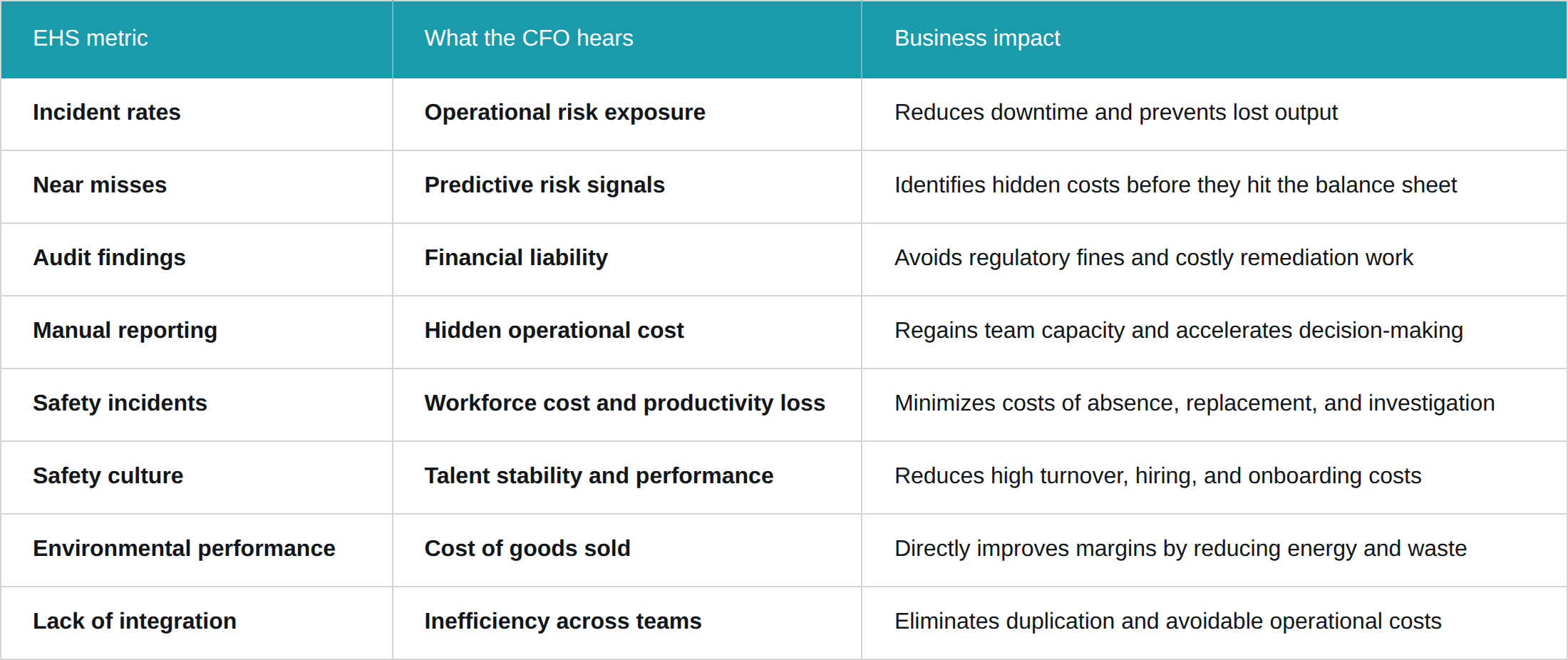
Most EHS leaders present:
- Incident rates
- Training completion
- Audit findings
These metrics are important. They show activity, effort, and progress. But they don’t answer the question finance is trying to solve.
What does this mean for the business?
CFOs don’t allocate budget based on activity. They allocate it based on outcomes. If the link between your data and those outcomes isn’t clear, even strong EHS performance can struggle to gain traction.
That’s why conversations stall, not because the case is weak, but because it hasn’t been translated into decision-ready language.