5 minutes02/07/2024
With an ever increasing number of ESG concerns and multiple reporting requirements, managing your organization’s sustainability program can be stressful.
Limited time and resources mean you need to focus on the most impactful factors, but how do you know what really matters to your business? That’s where materiality comes in.
By helping you navigate which factors are the most important to your business and stakeholders, materiality allows you to maximize your sustainability efforts. Without it, your ESG program can become lost, tracking less pertinent issues.
In this guide, we’ll help you make sense of this tricky topic, and explain how to conduct a materiality assessment so you know where to concentrate your efforts.
What is ESG materiality?
Basically, materiality provides a way to know what matters and what doesn’t when it comes to ESG. It can help you determine which issues are most relevant – or material – to your business, and what should factor prominently in your ESG program.
Because ESG means different things to every company depending on your industry, geography, and local regulations, you’ll need to conduct a materiality assessment to establish which issues are important.
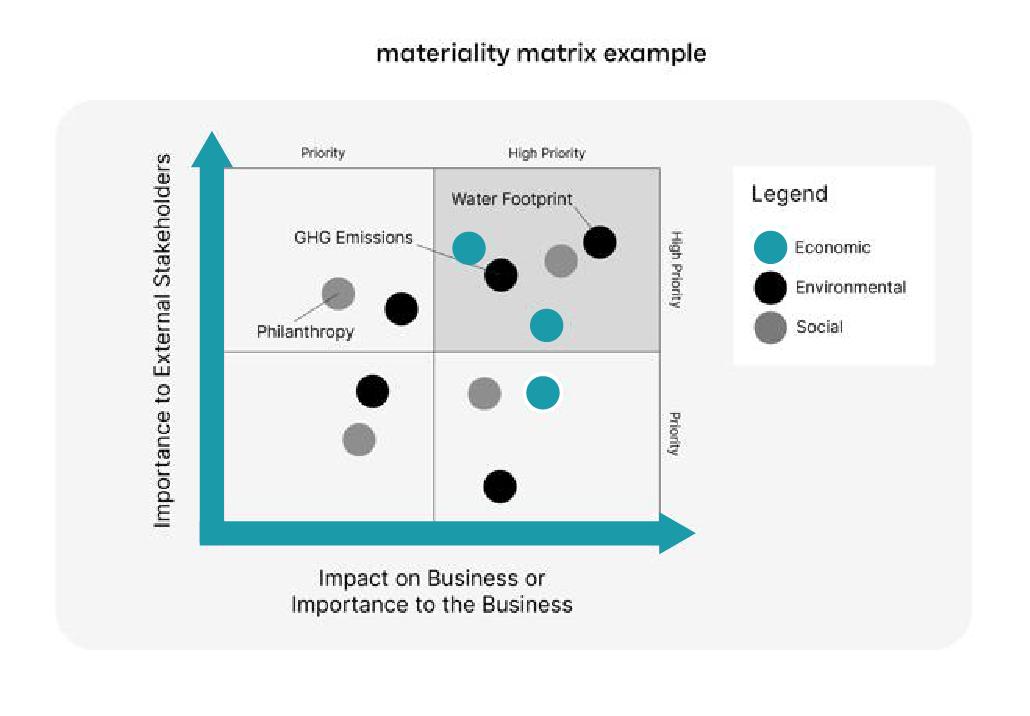
The idea of an assessment is to identify the factors that are being impacted the most by your organization, as well as those that your stakeholders care most about. To do this, you’ll need to take input from all internal and external stakeholders.
Understanding double materiality
In order to appreciate which issues have the most impact for your organization, you might want go a little further to consider double materiality.
Put simply, double materiality is the idea that ESG and sustainability is a two-way street. That means companies should consider:
- how their business is affected by ESG and climate change issues; and
- how their business has an effect on society and the environment
Although the conversation is typically around climate risk, double materiality can relate to any dimension of ESG and with this in mind, it’s important to recognize that stakeholders are more than just financial investors. Local communities and the public as whole are also stakeholders in your business.
If you would like to know more about double materiality and how it can help to evaluate ESG impacts both up and down the value chain, you can read our guide to Demystifying Double Materiality here.