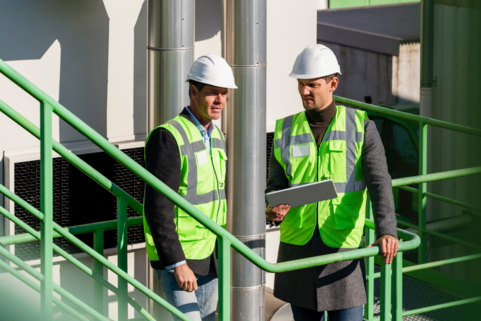
Two safety workers with white helmets

Environment & Sustainability, Occupational Safety

Why AI is the Missing Piece in Modern Safety and Sustainability Management

Learn how AI is revolutionizing safety and sustainability management by addressing today’s complex regulatory, operational, and workforce challenges.
5 minutes17/03/2026

Environmental, Health, and Safety (EHS) and sustainability functions are evolving rapidly. Driven by shifting regulations, increasingly complex supply chains, and a renewed focus on workforce wellbeing, the challenges facing organizations today are unlike anything we’ve seen before. In this landscape of rising complexity, Artificial Intelligence (AI) is emerging as the critical solution to help organizations not just keep pace -but get ahead. 

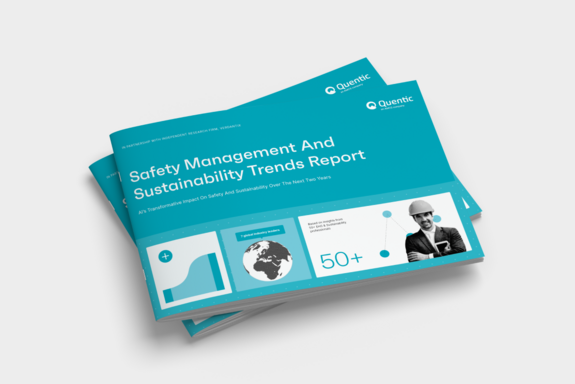
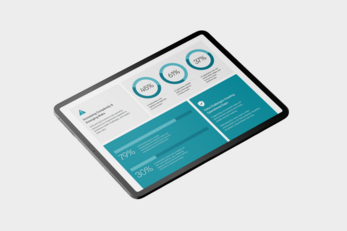
Based on insights from the latest Safety Management and Sustainability Trends Report. AI’s Transformative Impact On Safety And Sustainability Over The Next Two Years developed by Quentic in partnership with independent research firm Verdantix, discover how AI is revolutionizing safety and sustainability management by addressing today’s complex regulatory, operational, and workforce challenges.
The Growing Complexity Facing EHS and Sustainability Teams

Organizations worldwide are grappling with fractured regulatory frameworks that vary by region and change constantly. For example, evolving EU regulations like the Omnibus proposals create a tangled web of compliance obligations, making it difficult for firms to maintain consistent safety and sustainability standards across global operations. This is further complicated by sprawling multi-tier supply chains and diverse contractor networks, which introduce hidden risks and data blind spots. 

Additionally, the traditional definition of workplace safety itself is expanding. Increasingly, organizations recognize occupational health concerns such as mental wellbeing, fatigue, and burnout as integral to their safety strategies. These psychosocial factors add layers of complexity that require more nuanced monitoring and management. 

As Mary Foley, Expert Services Strategy Director at Enhesa explains, “Health and safety once centered on preventing physical incidents like slips, trips, and falls, particularly in industrial settings, but the focus has broadened significantly in recent years. Since COVID-19, mental wellbeing, stress, fatigue, and even climate-related emergency preparedness have become core components of managing workforce health.”   

Despite growing awareness of these issues, many companies struggle to convert data into actionable insights. Fragmented workflows and inconsistent reporting create gaps in risk visibility and slow down timely decision-making. This reactive approach leaves organizations vulnerable to incidents, compliance penalties, and reputational damage. 

AI: The Game-Changer in Proactive Safety and Compliance

Artificial Intelligence steps in as a transformative force by enabling a shift from reactive firefighting to proactive risk management. AI-powered tools bring powerful predictive capabilities that identify emerging risks before they escalate into incidents. Through advanced analytics and machine learning algorithms, these solutions analyze vast and varied data sets—from incident reports to environmental conditions -highlighting patterns and providing early warnings. 

Automation also reduces the administrative burden. Manual processes such as audits, incident documentation, and regulatory reporting are streamlined, minimizing errors and freeing up valuable time for EHS teams to focus on strategic priorities. As a result, organizations can create audit-ready, high-quality reports faster and with greater confidence. 

Importantly, AI isn’t replacing human expertise; it’s augmenting it. With 70% of ESG and 52% of EHS respondents favouring a copilot-centric AI strategy over the next two years, where AI assists safety professionals by surfacing insights and standardizing workflows, while final decisions remain in human hands - a balance that builds trust and ensures compliance.

Industry Voices: Progress and Strategic Importance of AI

The Safety Management and Sustainability Trends Report reveals encouraging signs of AI adoption. Around 84% of surveyed organizations say expanding AI use is a top strategic priority, with 82% expecting their AI budgets to grow in the next two years. However, readiness varies considerably, with some firms still addressing foundational challenges like data quality and governance. 

Felix Keser, Managing Partner and co-CEO at Nexio Projects, emphasizes: 

“AI excels in scenario analysis. It can rapidly test multiple inputs and outputs at scale, helping organizations detect meaningful patterns and assess potential outcomes before committing to decisions.” 

Prof. Dr. Jana Brauweiler, Professor of Integrated Management Systems at Zittau/Görlitz University of Applied Sciences, adds: 

“AI should be used as a co‑pilot — to analyse large data volumes, recognise patterns and prepare decisions, but not to carry them out. The responsibility must consciously remain with people, especially in safety‑critical areas.” 

Why You Can’t Afford to Overlook AI in Safety and Sustainability

As regulatory demands intensify, workforce dynamics evolve, and operational complexity escalates, relying on traditional EHS and sustainability methods is no longer sufficient. AI offers a strategic pathway to close critical gaps in risk visibility, automate compliance, and foster a proactive safety culture. 

Organizations that invest now in AI-enabled safety and sustainability tools will not only reduce incidents and regulatory risks but also boost operational efficiency and resilience in an uncertain future. 

Ready to Explore Further?

Discover a comprehensive analysis of how AI and other vital trends are revolutionizing EHS and sustainability functions in the full Safety Management and Sustainability Trends Report. Packed with expert insights and detailed survey data, this report is your roadmap for navigating the future of workplace safety and sustainability confidently. 

Download the full report


X