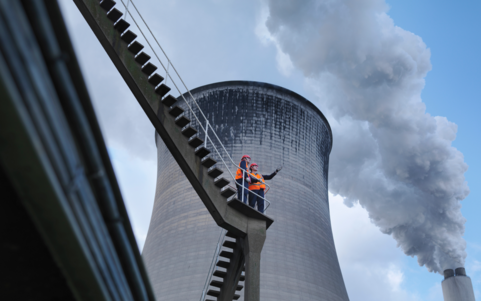
Two employees wearing orange vests in front of a coal power plant

Environment & Sustainability, Occupational Safety

Top 5 EHS and Sustainability Trends Shaping the Future of Workplaces

5 minutes17/03/2026

Environmental, Health, and Safety (EHS) and sustainability professionals are navigating an increasingly complex landscape. With 100% of firms without EHS and ESG software today planning to invest in the next 2 years, 2026 is shaping up as a year of digital transformation for safety and sustainability programs. 

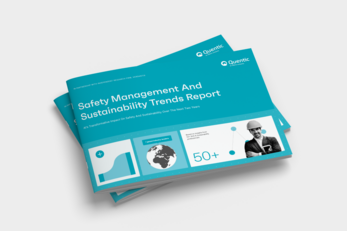
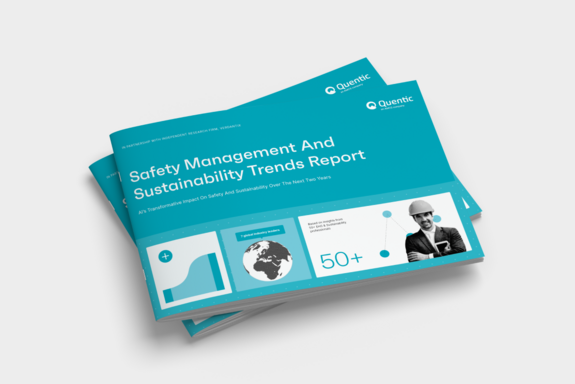
The new Safety Management and Sustainability Trends Report. AI’s Transformative Impact On Safety And Sustainability Over The Next Two Years, developed by independent research firm Verdantix in partnership with Quentic, highlights this and other pivotal trends that are set to redefine how organizations manage workplace safety, regulatory compliance, and environmental stewardship. 

In this article we explore five trends from the Report that are transforming EHS and sustainability functions and the expert insights that every workplace leader should know to stay ahead. 
1. Navigating Rising Complexity Amid Regulatory Fragmentation and Supply Chain Risks

Regulatory demands keep evolving rapidly, especially with recent shifts like the European Parliament’s Omnibus proposals injecting new layers of complexity. For many organizations, fragmented regulations combined with sprawling multi-tier supply chains create blind spots, making compliance an uphill task. Nearly half of firms surveyed (45%) prioritize regulatory and legal risks as very important concerns.  

The challenge? Translating regulatory awareness into proactive, consistent action remains elusive. Fragmented data, decentralized contractor networks, and diverse global sites create gaps in risk visibility. This increases vulnerability to compliance breaches and safety incidents, particularly as climate-related risks become more frequent and severe. 

“Regulatory uncertainty – regional and global – creates a fast-moving environment with a lot more political emotions on sustainability topics, which makes it different from 3-4 years ago.” says Mary Foley, Expert Services Strategy Director at Enhesa. 

2. Elevating Workforce Health: Beyond Physical Safety to Mental Wellbeing

The concept of Total Worker Health - integrating psychosocial wellbeing with traditional safety practices - has gained substantial momentum. About 37% of organizations now view mental health, fatigue, and burnout as critical workforce risks. Regions like Austria and Switzerland lead with over two-thirds (67%) of respondents prioritizing occupational health, demonstrating progressive cultures that foreground employee wellbeing. 

Organizations are adopting holistic strategies that intertwine physical safety with psychological health, fostering resilience in an era of climate change, and shifting workplace dynamics. 

“Developments such as climate change, rising heat stress, and evolving work environments require us to remain vigilant and continuously strengthen our monitoring and prevention efforts for psychosocial risks.”Christiane Ginestou, Group Health & Safety Prevention Director at Orange, shared in the report. 

3. Integrating ESG with Traditional EHS Functions: New Governance and Reporting Mandates

ESG continues to be increasingly woven into core EHS responsibilities. This convergence magnifies demands for consistent, reliable, and audit-ready data. Nearly 30% of sustainability professionals cite compliance as their largest operational gap, emphasizing the pressure to unify governance frameworks. 

The need for transparent reporting and data integrity drives organizations to adopt integrated platforms, but persistent inconsistencies in data quality limit agile decision-making. 

“Much of the information along the value chain is unstructured or not fully prepared, making it difficult to meet today’s HSE and ESG requirements.” says Prof. Dr. Jana Brauweiler, Professor of Integrated Management Systems at Zittau/Görlitz University of Applied Sciences.

4. Technology and AI: From Pilot Projects to Strategic Enablers of Predictive Safety and Compliance Automation

Perhaps the most transformative trend is the growing role of advanced technology and AI in EHS and sustainability. Over 80% of firms plan to increase AI investments in the next two years. AI’s use is moving beyond experimental pilots toward full-scale applications such as: 

  • Automated compliance monitoring to reduce manual errors   
  • Predictive analytics identifying risk patterns before incidents occur   
  • AI-assisted reporting to streamline workflow and improve data accuracy

With 70% of ESG and 52% of EHS respondents favor “copilot” AI models that augment human decision-making rather than replace it, ensuring transparency, trust, and compliance. 

“Organizations will take a supportive, hand‑in‑hand approach. You still need people involved, building trust and taking ownership, because if you impose AI without them, it becomes a barrier rather than a benefit.” emphasizes Hugh Maxwell, Managing Director, Maxwell Safety Limited. 

Successful AI adoption hinges on robust data governance, seamless integration with existing platforms, and grounded change management processes. 

5. Organizational and Cultural Shifts: Leadership Buy-In and Data Governance as Critical Enablers

The pace of technological adoption and regulatory change requires more than tools; it demands cultural transformation. Leadership commitment emerges as a critical success factor, with 45% of survey respondents noting the challenge of overcoming change management barriers and securing executive support. 

User-friendly technology aligned with frontline realities fosters adoption, while data governance frameworks ensure high-quality inputs fueling AI and analytics initiatives. Interdisciplinary collaboration, especially early engagement with IT functions, is fundamental to unlocking funding and accelerating innovation. 

“If the business case is strong, people will fight to get the AI tool. Significant budgets now go through the C‑Suite AI leader, and they will find the money if the value is clear.” says Eduardo Blanco-Munoz, Group HSSE Director, Affiliated Professor at French Conservatoire National des Arts et Métiers, and Author of ‘Human Factors and Safety Culture’ (CRC Press). 

Looking Ahead at the Future of EHS and ESG

The Safety Management and Sustainability Trends Report paints a clear picture: EHS and sustainability functions face escalating complexity, but the path forward is powered by integrated technology, holistic workforce health approaches, and mature governance. Organizations that embrace these trends with strong leadership, data discipline, and a culture of continuous improvement will build safer, more resilient, and sustainable workplaces. 


Want to dive deeper? 

Download the full Safety Management and Sustainability Trends Report for rich survey data, expert insights, and detailed guidance on how these trends will unfold through 2026 and beyond. Whether you’re an EHS professional, sustainability leader, or corporate executive, this report is your essential roadmap to navigating the future of workplace safety and sustainability with confidence. 

Download now 

X